
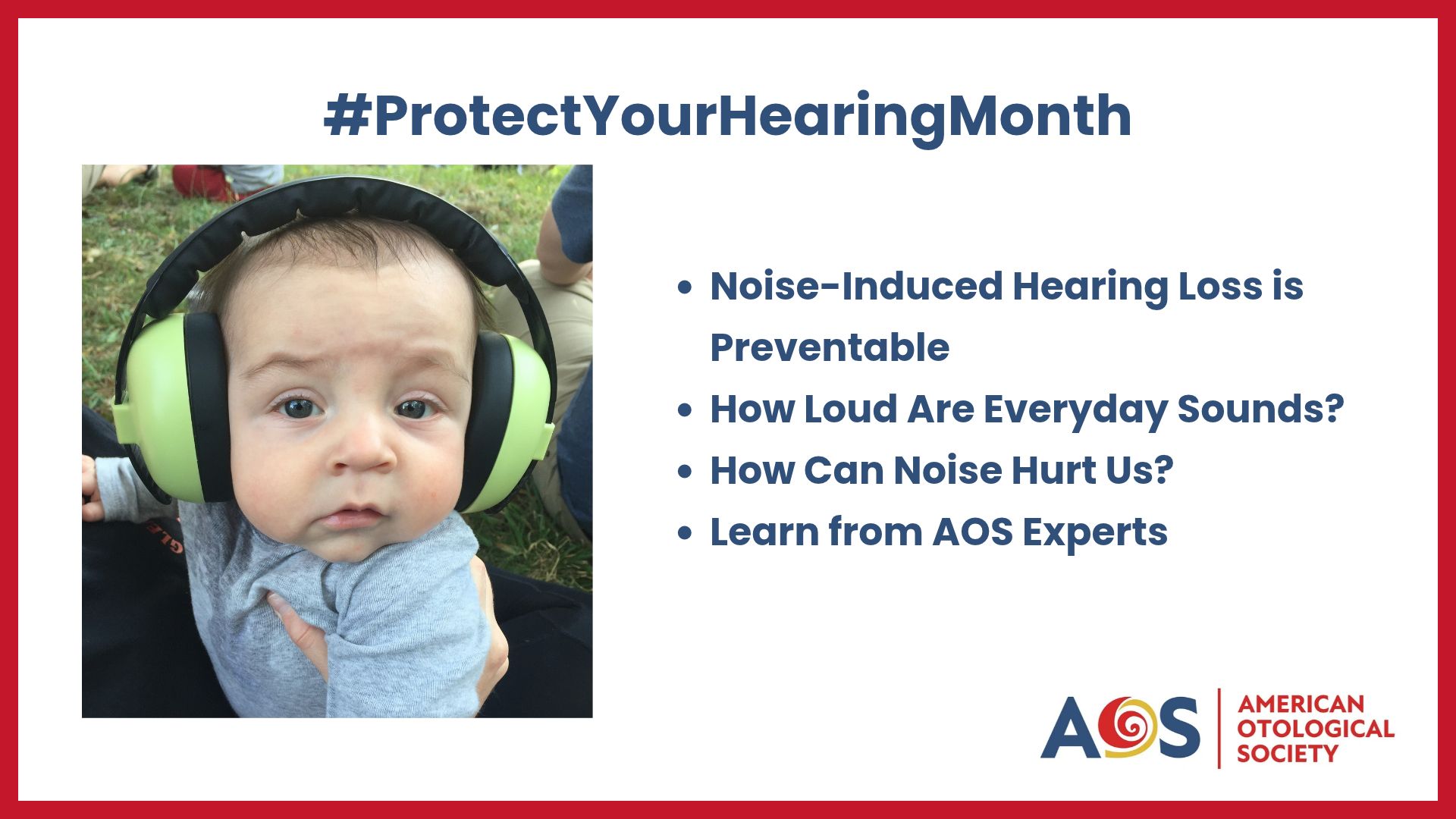
October is National Protect Your Hearing Month. From concerts and sporting events to lawnmowers and everyday headphones, loud sounds are part of our lives and noise is a leading environmental nuisance. Exposure to sounds that are too loud, too close or last too long can permanently damage hearing.
Noise-induced hearing loss is very real and very preventable. There are simple steps we can take to protect our hearing at every age.
How Loud Is Too Loud?
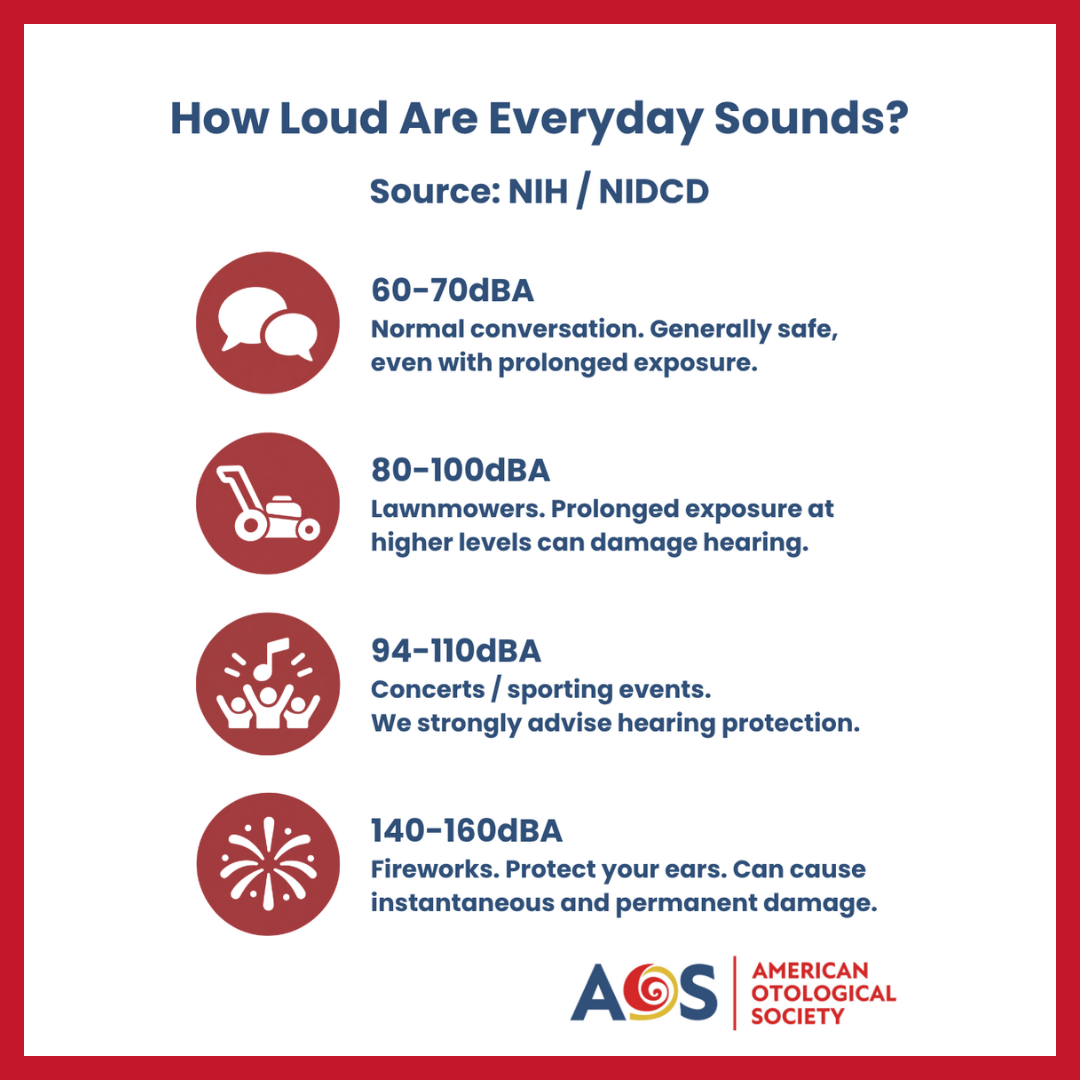 Sound is measured in decibels (dB). According to the National Institute on Deafness and Other Communication Disorders (NIDCD), long or repeated exposure to sounds at or above 85 A-weighted decibels (dBA) can cause hearing loss.
The louder the sound, the less time it takes for damage to occur.
Consider these common sounds:
- Normal conversation: 60–70 dBA
- Lawnmowers: 80–100 dBA
- Concerts and sporting events: 94–110 dBA
- Fireworks: 140–160 dBA
You may be exposed to damaging noise if you need to shout to be heard by someone an arm’s length away, experience ear pain or notice ringing or buzzing in your ears.
Exposure time matters, too. Under guidelines from the National Institute for Occupational Safety and Health (NIOSH), recommended daily occupational exposure is limited to one hour at 94 dBA, 15 minutes at 100 dBA and less than two minutes at 109 dBA.
These are occupational recommendations, not precise predictions of when hearing damage occurs. We strongly advise hearing protection at concerts and sporting events. Fireworks can cause immediate and permanent hearing damage, even with brief exposure.
Hearing damage can develop gradually, making it difficult to recognize until hearing loss becomes noticeable.
Noise Can Affect More Than Hearing
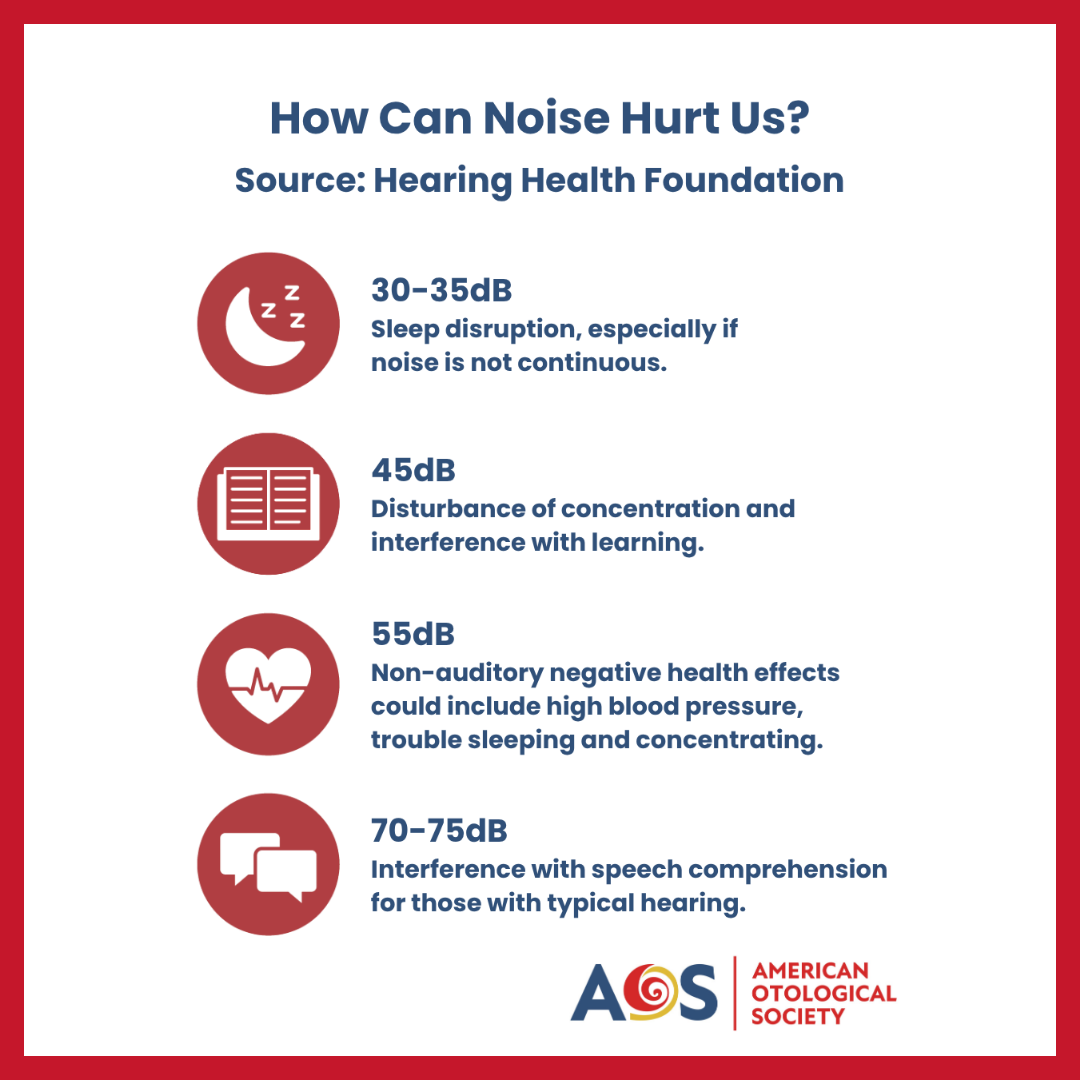 Noise can affect everyday life even at levels below those typically associated with permanent hearing loss.
Hearing Health Foundation (HHF) highlights effects on sleep, concentration, learning and speech comprehension.
Depending on the level and duration of exposure, non-auditory health effects could include high blood pressure, trouble sleeping and difficulty concentrating.
These effects are distinct from the risk of permanent noise-induced hearing loss.
Three Ways to Protect Your Hearing
The NIDCD recommends three practical steps:
- Lower the volume: Keep personal listening devices, televisions and other audio equipment at comfortable levels.
- Move away from loud sounds: Increase your distance from speakers, machinery and other sources of excessive noise.
- Wear hearing protection: Use properly fitted earplugs or protective earmuffs at concerts, sporting events, fireworks displays and other noisy activities.
Children also benefit from hearing protection. Parents and caregivers can help establish healthy hearing habits early by modeling safe listening practices and making hearing protection readily available.
Learn More From AOS Experts
At the American Otological Society’s 158th Annual Meeting in New Orleans in 2025, a panel of specialists presented “The Sound of Silence: A Comprehensive Discussion on Noise-Induced Hearing Loss.”
Watch the recorded discussion to learn more about the science of noise-induced hearing loss, its clinical implications and approaches to prevention and management.
The discussion examined the causes and underlying mechanisms of noise-induced hearing loss, approaches to measuring noise exposure, hearing protection and treatment.
The panel was introduced by then-AOS President William H. Slattery III, MD.
Co-moderators:
- Matthew L. Bush, MD, PhD
- Quyen Nguyen, MD, PhD
Panelists:
- Anne Morgan Selleck, MD
- Hamid Djalilian, MD
- Isaac D. Erbele, MD
Recognizing Hearing Loss and Seeking Care
 While noise-induced hearing loss is preventable, hearing loss can have many different causes.
Recognizing changes in hearing and seeking appropriate evaluation are important steps toward identifying the cause and available treatment options.
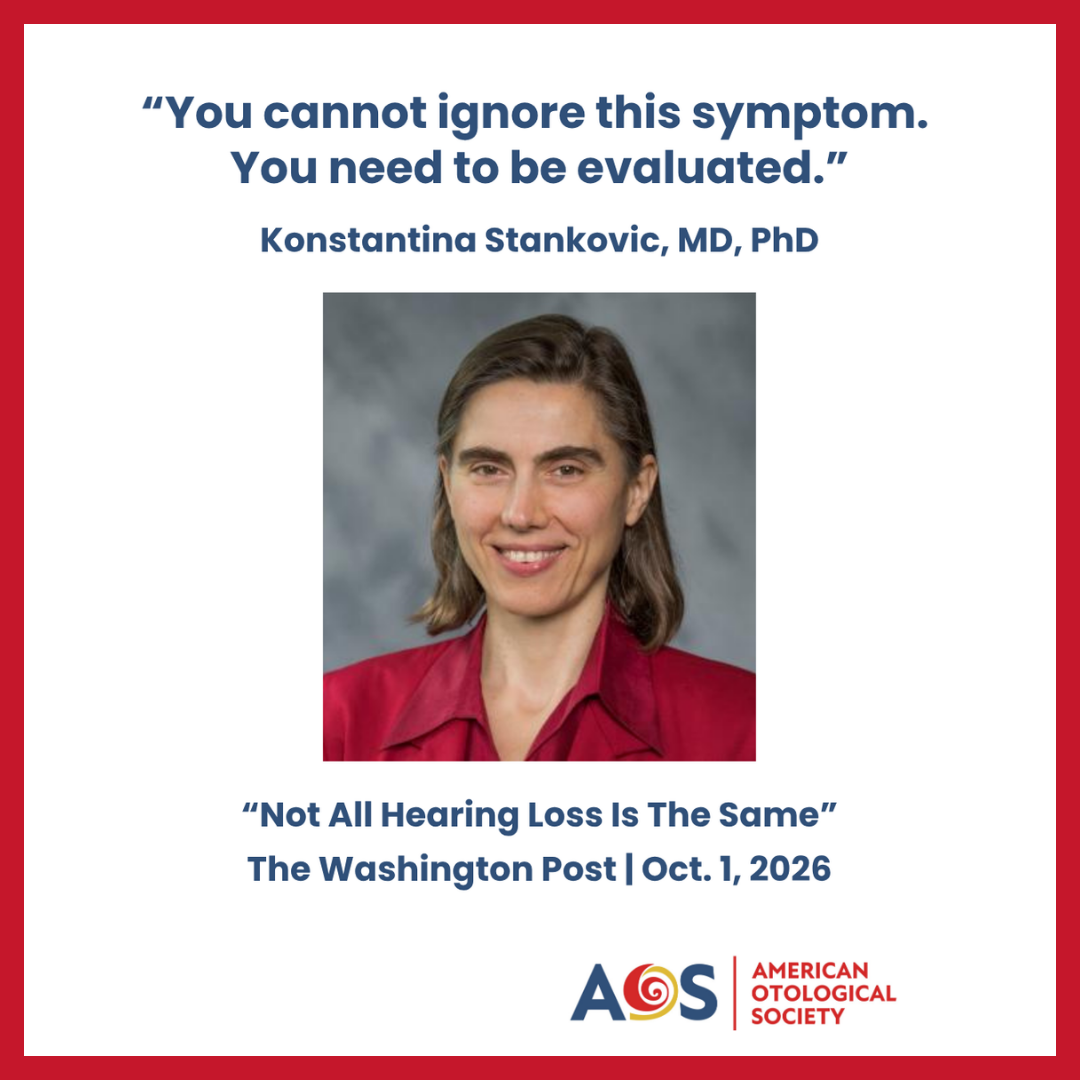
In an Oct. 1, 2026, article in The Washington Post, AOS Fellow Konstantina Stankovic, MD, PhD, Chair of Otolaryngology and practicing otologist-neurotologist and auditory neuroscientist at Stanford University, emphasized the importance of evaluating hearing loss:
“You cannot ignore this symptom. You need to be evaluated.”
The article explores different types of hearing loss, how they are diagnosed and the treatments that may help.
Read “Not all hearing loss is the same. Here’s what can help” in The Washington Post.
Additional Resources
For more information about hearing health and protecting your hearing, explore resources from the NIDCD and Hearing Health Foundation:
- NIDCD: How Loud Is Too Loud?
- NIDCD: Noise-Induced Hearing Loss
- NIDCD:Protect Your Child’s Hearing, and
- Hearing Health Foundation:What Are Safe Decibels?
Protecting your hearing today can help preserve it for years tocome.