
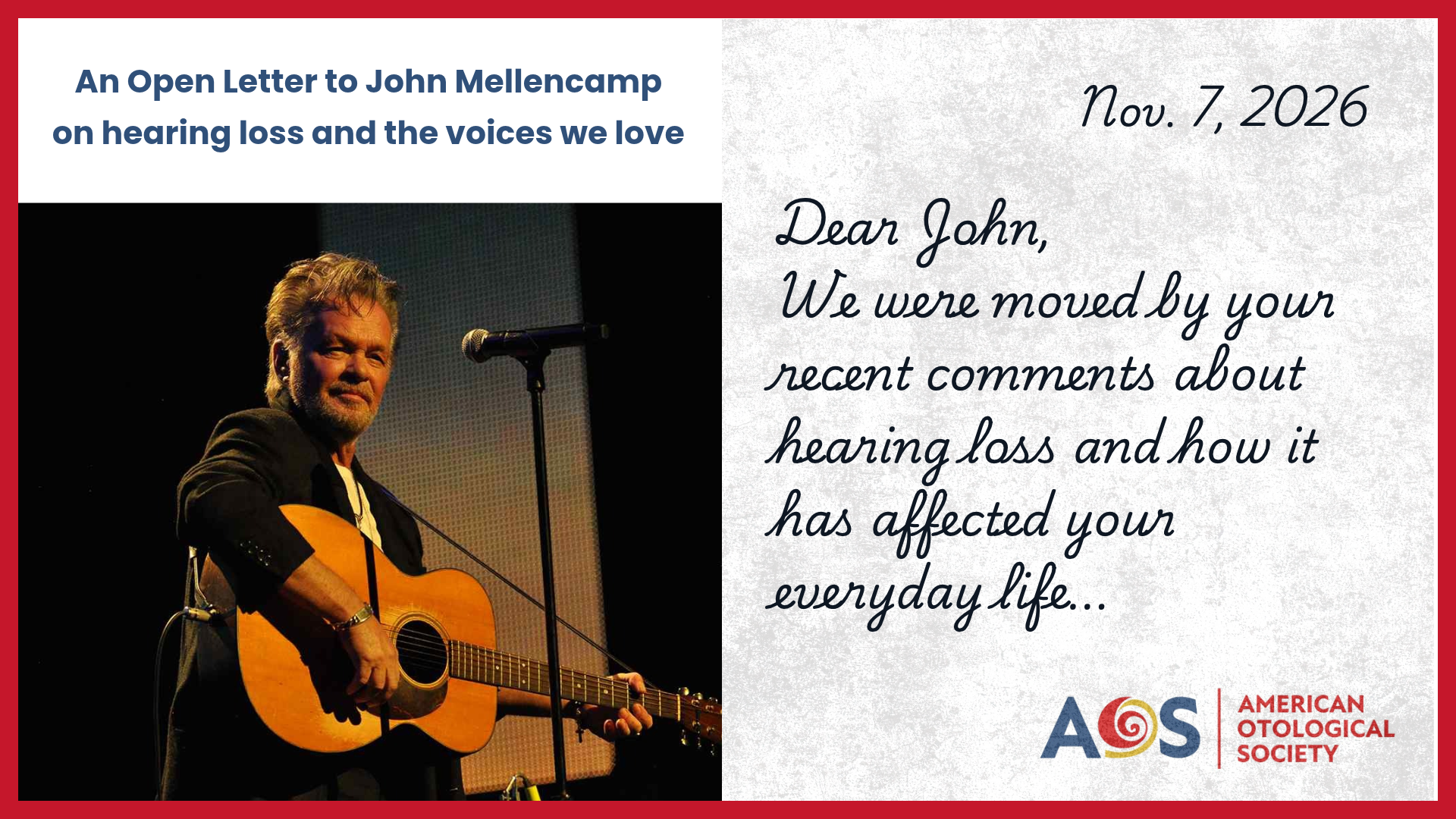
Dear John,
We were moved by your recent comments about hearing loss and how it has affected your everyday life. You described the difficulty of following conversations in restaurants, the constant ringing in your ears and your concern about losing even more of your hearing.
Thank you for speaking so openly about something so personal. Your experience is one that millions of people can relate to, even if they’ve never stood on a stage in front of thousands of fans.
We were particularly struck by what you shared about your grandmother. She said, “John, don’t ever get hearing aids, because once you get them, you can’t live without them” and she cautioned it’d be one more thing to keep track of.
Grandmothers are always right. And she certainly had a point about having too many things to keep track of: reading glasses, car keys, the TV remote and maybe a favorite guitar pick.
But there might be another way to look at it. Hear us out.
What if hearing aids become something you don’t want to live without because they make life better?
For millions of people, hearing aids have made a meaningful difference. They can make it easier to participate in conversations, enjoy meals with friends and family and stay connected to the people and experiences that matter most.
Earlier this year, the American Otological Society had the privilege of hosting Huey Lewis for a webinar on Music, Hearing Loss and the Brain, alongside Dr. Francis Collins and neurotologist Dr. Charles Limb.
Huey has spoken movingly about his experience with Ménière’s disease, which has profoundly affected his hearing and his relationship with music. His cochlear implant and hearing aid help him understand conversations, although he still struggles to hear and enjoy music.
Your experiences are different, but both remind us that hearing loss affects far more than our ability to hear sounds. It can change how we engage with the world and the people around us.
We recognize that hearing aids aren’t a cure, and they aren’t the right answer for everyone. Hearing care is personal, and there are no guarantees. But for so many people, hearing technology has opened doors they feared were closing.
John, we hope you’ll consider speaking with a hearing health professional about what might help. And we extend that same encouragement to anyone reading this who has been reluctant to explore their options.
Jack and Diane may be forever young in your song. But life goes on for all of us, and we want to keep hearing the voices of the people we love as the years pass.
Thank you again for sharing your experience. We hope your candor encourages others to take that first step toward better hearing health.
With appreciation,
The American Otological Society
Watch Huey Lewis talk about hearing loss in his own words.
Watch the full webinar, “Music, Hearing Loss and the Brain,” featuring Huey Lewis, Dr. Francis Collins and Dr. Charles Limb.
About the American Otological Society
The American Otological Society (“AOS”) is the second oldest single-specialty medical society in America. Established in 1868, AOS is the senior and most esteemed organization dedicated to the advancement of treatments and prevention of ear-related disorders that may affect hearing, balance, neurological function and communication.
The AOS Research Foundation supports research aimed at improving the understanding and treatment of hearing loss, tinnitus and balance disorders, and has distributed more than $8 million in research funding to advance hearing and balance health. In the 2025-26 funding cycle alone, AOS awarded seven research grants totaling approximately $325,000.